The full AI platform, on your infrastructure
Self-hosted Tridan AI is the full AI agent platform deployed inside your VPC or on your own servers. It runs local models through Ollama, keeps embeddings in a self-hosted Qdrant vector database, uses self-hosted Supabase for application data, masks personal data with built-in PII detection, and serves your whole company through multi-tenant organizations. Your data is never used for training.
- Cloud: your own VPC on AWS, Azure, or GCP
- On-premises: your servers or a dedicated machine
your-vpc: deployment
$ tridan deploy --target your-vpc
Platform services running
Qdrant vector database ready
Local models loaded via Ollama
Self-hosted Supabase connected
PII detection middleware active
Your data stays inside your network
What is self-hosted Tridan AI?
Self-hosted Tridan AI is the enterprise deployment option in which the complete platform, including the vector database, application database, and model serving, is installed inside the customer's own cloud account or data center. Our team installs, configures, and tests the stack, and the customer keeps full control over data, network access, and the choice between local and external models.
Read the hosted plan documentationWhy self-host an AI platform?
Self-hosting is for organizations whose regulatory, contractual, or security requirements do not allow customer data, documents, or call recordings to leave their own network. It gives complete data control, PII detection and anonymization for any request that goes to an external model, multi-tenant organizations for the whole company, and a guarantee that your data is never used for training.
Complete Data Control
Run everything in your VPC or on-premises. Your data stays inside your network, accessible only to the people and systems you authorize.
PII Detection & Anonymization
Built-in middleware detects and masks personal data before any request reaches an external model provider.
Multi-Tenant Organizations
Isolated organizations, roles, and permissions, one deployment securely serves every team in your company.
Never Used for Training
Your data is never used to train models. Full sovereignty for regulated industries and strict compliance requirements.
- CustomersChat and phone requests
- Your agentsRun on your servers
- Ollama or gatewayLocal models, or external via your gateway
- Your dataStays inside your network
- Your teamOperates and audits it
What ships with a self-hosted deployment?
Every deployment ships with the full Tridan AI platform, a self-hosted Qdrant vector database for embeddings and document search, local model serving through Ollama with optional access to OpenAI, Anthropic, Meta, and DeepSeek through PII-safe middleware, and a self-hosted Supabase stack for authentication and application data. We deploy and configure all of it on your infrastructure.
The Full Tridan AI Platform
Custom AI agents, chat, and retrieval over your documents, the complete platform, running privately for your organization.
Qdrant Vector Database
Self-hosted vector search keeps your embeddings and document knowledge inside your own network.
Local Models via Ollama
Serve open models entirely on your hardware, or mix in OpenAI, Anthropic, Meta, and DeepSeek through PII-safe middleware.
Self-Hosted Supabase
Authentication and application data run on a Postgres stack you own and control.
Two ways to run your models
Keep everything inside your network, or combine your private deployment with leading external models through our PII middleware, the choice depends on your privacy and cost preferences.
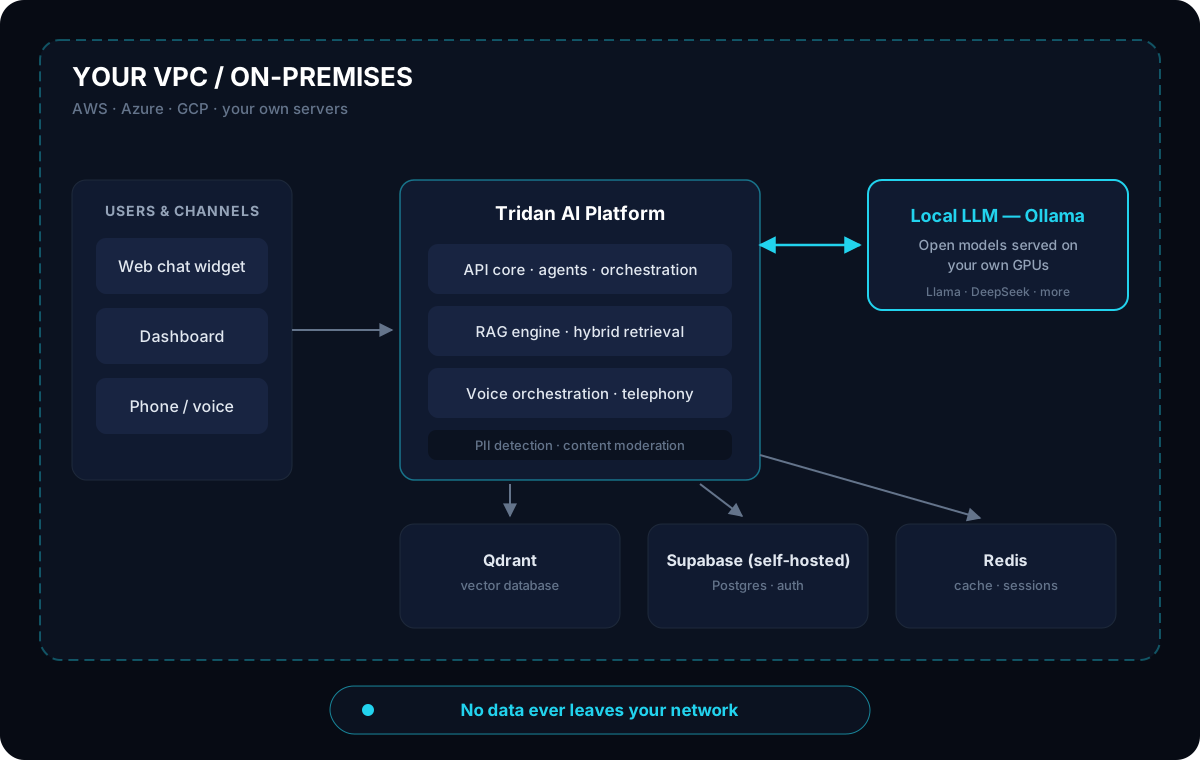
Option 1: Fully private, LLM inside your VPC
- No data ever leaves your network.
- LLM, vector database, and all data reside within your infrastructure.
- Local open models served via Ollama.
- Higher GPU costs on cloud providers.
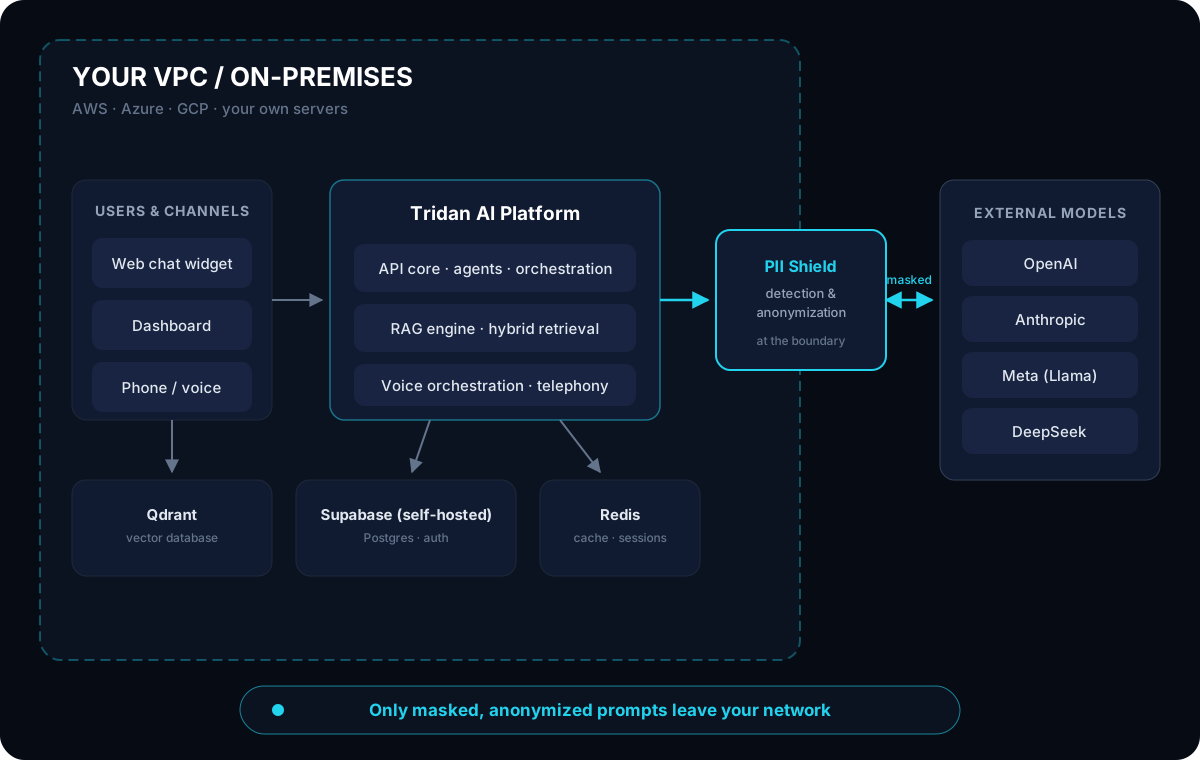
Option 2: External models with PII protection
- Use 4 leading AI models: OpenAI, Anthropic, Meta, and DeepSeek.
- Lower infrastructure cost than running local models on your own GPUs.
- PII detection and anonymization before any data reaches the model. Learn more
- Masked prompts are processed by external model providers.
Managed cloud or self-hosted: which deployment fits?
Both editions run the same platform and the same agents. The table compares where data lives, which models are available, and who operates what.
Swipe sideways to see the full table
| Managed cloud (SaaS) | Self-hosted (VPC / on-premises) | |
|---|---|---|
| Where data lives | Tridan AI's hosted platform, in an isolated tenant per customer | Your VPC or data center; nothing leaves your network unless you choose external models |
| Models | OpenAI, Anthropic, Meta, and DeepSeek, selectable per agent | Local open models through Ollama, plus the same four families through PII-safe middleware |
| PII masking | Platform-level data protection under the published data processing terms | Built-in PII detection and anonymization before any request reaches an external model |
| Who operates it | Tridan AI runs, monitors, and updates the platform | Your team runs the infrastructure; Tridan AI installs, configures, and supports the stack |
| Updates | Continuous, applied by Tridan AI with no downtime to schedule | Delivered as releases that you apply with our support, on your own schedule |
| Best for | Teams that want to start today on a plan, including the free plan, with no infrastructure | Regulated organizations and companies that must keep data, models, and recordings inside their own network |
Choose the managed cloud to start fast, and self-hosted when your data must stay inside your own network; the agents and features are the same in both.
From kickoff to go-live in five steps
Our team guides you through each step, from initial infrastructure setup to final deployment, making sure every security and compliance requirement is met.
Infrastructure Setup
We prepare your VPC or on-premises environment for deployment.
Configuration
Security parameters and system integrations are set up to your requirements.
Data Integration
Securely connect internal databases and applications to the platform.
Access Control
Define organizations, roles, permissions, and authentication mechanisms.
Deployment & Testing
We verify functionality and security compliance before go-live.
Common questions about self-hosting
Which infrastructure do we need for self-hosting?
The platform runs inside your VPC on a public cloud such as AWS, Azure, or GCP, or on-premises on your own servers or a dedicated machine. Requirements depend on the model option: local models through Ollama need GPU capacity, while the external-model option with PII middleware runs on standard CPU servers. We size the environment together during the deployment call.
Can we run the platform without any external AI provider?
Yes. In the fully private option, the language model, the Qdrant vector database, and all application data run inside your network, with open models served through Ollama. No prompt, document, or recording leaves your infrastructure. The trade-off is GPU cost: running capable local models needs dedicated hardware, which is why some customers combine local processing with external models behind PII masking.
How does PII detection and anonymization work?
Built-in middleware inspects every request before it reaches an external model provider, detects personal data such as names, phone numbers, emails, and addresses, and replaces it with placeholders. The external model works on the masked prompt, and the platform restores the original values in the answer inside your network, so the provider never sees the personal data.
Can one deployment serve several teams or companies?
Yes. Multi-tenant organizations let one self-hosted deployment serve every team, department, or subsidiary with isolated documents, agents, conversations, and users. Roles and permissions are managed per organization, and authentication runs on the self-hosted Supabase stack you control, so you can connect it to your existing identity setup during the access control step of deployment.
Who installs and maintains the platform?
Our team prepares the environment, installs and configures the stack, connects your data sources, sets up organizations and access control, and tests functionality and security before go-live. After that, your team operates the infrastructure while we provide updates and support under the hosted plan. The documentation describes the deployment steps and the responsibilities on each side.
How is self-hosting priced?
Self-hosted deployments are priced individually, because the scope depends on infrastructure, the model option, the number of organizations, telephony, and the integrations involved. The pricing page explains the plan structure, and after a deployment call we send a written offer that covers installation, configuration, and ongoing support, so you can compare it with the managed cloud before deciding.
Last updated · Reviewed by Nemanja Milivojevic, Founder
Run Tridan AI on your own terms
Talk to our team about deploying the platform in your VPC or on-premises, we'll walk you through architecture, sizing, and timelines.